



Call Our Patio Experts Today!
Call Our Patio Experts Today!
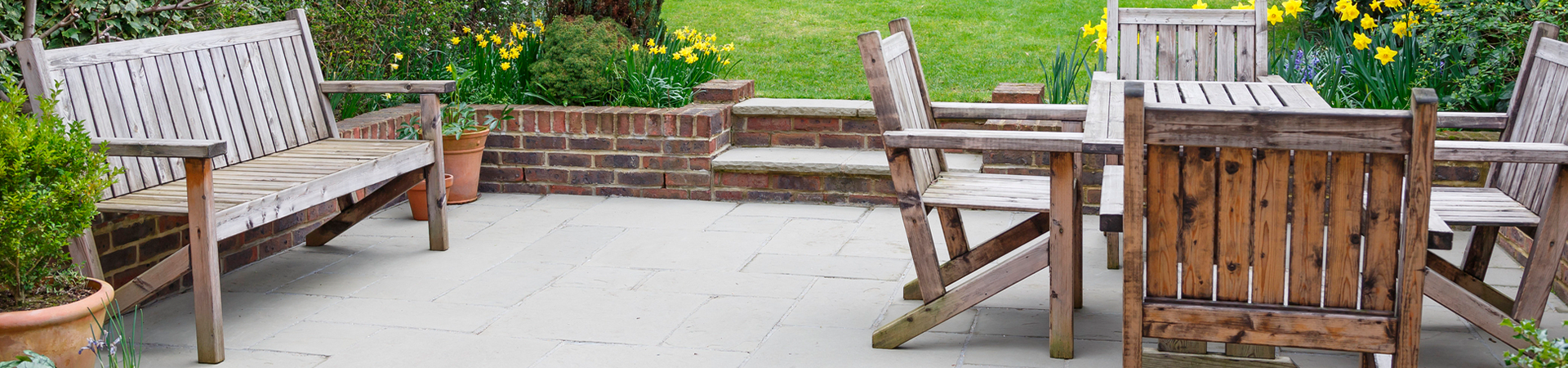
Metairie’s older neighborhoods carry a lot of brick, in the houses, the walkways, and the low garden walls that line so many yards. That history is exactly why brick and paver patios read so naturally here, in a way they might not in a newer subdivision with no brick in sight. Matching a patio to what’s already there is half the design work done for you.
The other half is knowing what actually separates a brick or paver patio that lasts decades from one that starts heaving and shifting within a few years. On Jefferson Parish’s flat, water-table-heavy lots, that comes down to what happens under the surface, not the pattern on top.
A lot of Metairie’s housing stock dates from decades when brick was the standard material, and that legacy shows up everywhere, in facades, chimneys, and garden walls. A brick patio in a running bond or herringbone pattern picks up on that existing material language instead of introducing something that reads as new and separate. It’s a small design decision that makes a big difference in how finished the whole property looks.
Reclaimed or antique-style brick pushes that further, giving a patio the worn, settled look of something that’s been there for years even when it’s brand new. It costs more than standard clay brick, and for a lot of Metairie homeowners it’s worth it for the way it ties the yard to the house.
Concrete pavers come in far more colors, shapes, and patterns than brick, which opens up design options if you want something more contemporary or if your home isn’t a brick match to begin with. They’re also manufactured to tighter dimensional tolerances than clay brick, which can make installation slightly more forgiving.
The real advantage shows up later. If a section of paver patio settles or a single unit cracks, that piece lifts out and gets replaced without disturbing the rest of the surface. Brick can be repaired the same way, but pavers are specifically designed around that kind of individual serviceability, which matters over a 20-plus year lifespan.
Both brick and pavers are unit paving, meaning individual pieces set on a prepared base instead of one continuous poured slab. That base is doing almost all the structural work. In Jefferson Parish, with soft alluvial soil and a water table that sits close to the surface across much of Metairie, a properly compacted aggregate base isn’t optional, it’s the difference between a patio that stays flat for decades and one that heaves within a few seasons.
Proper installation means excavating to the right depth, compacting the sub-base in lifts, and setting a bedding layer of sand before the units go down. Skipping steps here to save cost is invisible on installation day and very visible three years later when sections start settling unevenly. Nearby Kenner and River Ridge sit on the same soil profile and need the same base treatment.
The sand between units does real work, locking the pattern in place and keeping individual pieces from shifting under load. Standard sand washes out over time, especially with our heavy rain, and needs periodic refilling. Polymeric sand hardens after it’s wetted in, resisting washout much better and cutting down how often that maintenance comes up.
New brick or pavers sometimes develop a white, chalky haze called efflorescence, caused by natural mineral salts working their way to the surface. It’s cosmetic, not structural, and it typically fades within the first year or two as the material weathers, especially with regular rinsing. It’s worth knowing about ahead of time so it doesn’t look like a defect when it shows up.
Against poured or stamped concrete, both brick and pavers offer that individual-unit repairability, at a higher material cost. Against flagstone or cut stone, brick and pavers install faster and more predictably, since natural stone varies piece to piece in a way manufactured units don’t. Whichever surface you land on, pairing it with a patio cover protects the finish and extends how many months a year the space gets real use.
Both perform well when installed with proper base prep. Brick suits homes and neighborhoods with existing brick character. Pavers offer more design flexibility and easier individual repair. The right choice usually comes down to what matches your home and how much design variety you want.
That’s efflorescence, a natural mineral deposit that surfaces on new brick or concrete pavers. It’s cosmetic and typically fades within a year or two, especially with regular rinsing. It’s not a sign of a defective installation.
Standard sand can need topping off every couple of years with heavy rain, while polymeric sand, which hardens in place, resists washout far longer and cuts that maintenance significantly. It’s worth asking your contractor which type is being used before installation.
Yes, that’s one of the real advantages of unit paving. The affected units lift out, the base gets corrected underneath, and the same units go back down. It’s a much smaller repair than anything possible with a poured concrete surface.
Considering a brick or paver patio for a Metairie property? Big Easy Patio builds both with base prep sized for Jefferson Parish’s soil and water table. Call (504) 384-8978 or use our contact page for a free estimate.


 Big Easy Patio